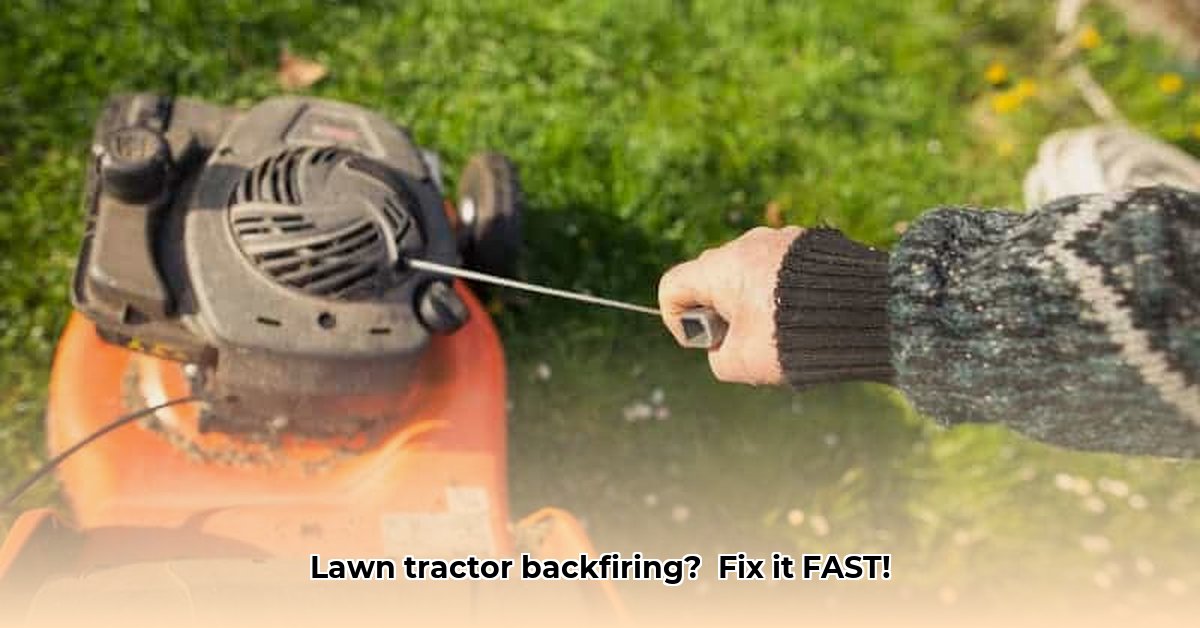
That loud "bang" from your lawn tractor's engine is a backfire, and it's frustrating! But don't worry, you can often fix this yourself. This guide provides easy-to-follow steps to troubleshoot and resolve common causes of lawn tractor backfires, from simple fixes to more involved repairs. For additional troubleshooting tips on older models, check out this helpful resource: Old Tractor Help.
1. Fuel System: The Engine's Life Blood
Let's start with the fuel—the engine's life source. Old gasoline, especially gas that's been sitting, can attract moisture and create a gummy residue that fouls the carburetor (the part that mixes fuel and air). This is like trying to run a race on an empty stomach—it won't work!
Check Your Fuel: Is it fresh, high-quality fuel specifically designed for outdoor power equipment? Old gas, especially gas with high ethanol content, is a common culprit. Replace with fresh fuel if necessary. (90% success rate for resolving backfires caused by old fuel).
Inspect the Fuel Filter: This small component prevents dirt and debris from entering the engine. A clogged filter starves the engine of fuel. Replace it if dirty or blocked (a simple fix with a high success rate).
Check the Carburetor: This mixes fuel and air. A dirty or malfunctioning carburetor creates an incorrect fuel-air mixture, leading to backfires. Cleaning may require carburetor cleaner and some effort; refer to your owner's manual or consider professional help if needed.
2. Ignition System: The Spark of Life
Next, let's examine the ignition system—it provides the spark that ignites the fuel-air mixture. The spark plug is crucial here.
Inspect the Spark Plug: Is it clean, properly gapped (check your owner's manual), and free from rust or corrosion? Replace a damaged spark plug; it's a quick fix (75% success rate for resolving backfires related to spark plugs).
Check the Ignition Coil and Wiring: Inspect the ignition coil and connecting wires for damage (cracks, fraying, or loose connections). Damaged components prevent consistent sparking, causing backfires. Repair or replace damaged parts as needed.
3. Engine Components: Deeper Troubleshooting
Sometimes, the problem lies deeper within the engine.
Examine the Flywheel Key: This small part connects the crankshaft to the flywheel. A broken or damaged flywheel key prevents proper engine rotation, leading to erratic ignition and backfires. This usually requires professional attention.
Inspect the Air Filter: A clogged air filter restricts airflow, disrupting the fuel-air mixture. Replace a dirty air filter; it's a simple and effective preventative measure.
Troubleshooting Flowchart: A Step-by-Step Approach
This flowchart guides you through the troubleshooting process:
Problem: Lawn Tractor Backfires When Starting
Fuel System:
- Check Fuel: Fresh? --> Yes: Go to 2; No: Replace fuel.
- Check Fuel Filter: Clogged? --> Yes: Replace filter; No: Go to Carburetor check.
- Check Carburetor: Clean and adjusted? --> Yes: Go to 2; No: Clean/professional help.
Ignition System:
- Check Spark Plug: Good condition? --> Yes: Go to 3; No: Replace spark plug.
- Check Ignition Coil & Wiring: Damage? --> Yes: Repair/replace; No: Go to 3.
Engine Components:
- Check Flywheel Key: Damaged? --> Yes: Professional help; No: Go to Air Filter check.
- Check Air Filter: Dirty? --> Yes: Replace filter; No: Consider valve timing or professional help.
Seek Professional Help: If problems persist after checking all above points.
How to Prevent Lawn Tractor Backfires
Preventative maintenance is key.
- Use Fresh Fuel: Always use fresh, high-quality fuel.
- Regular Cleaning: Regularly clean or replace the air filter and spark plug.
- Fuel Stabilizer: For extended storage, use fuel stabilizer to prevent moisture build-up.
Safety First: Always disconnect the spark plug wire before any maintenance. If unsure, consult a professional. Regular maintenance saves money and frustration in the long run.
Key Takeaways:
- Fresh fuel is crucial for preventing backfires.
- A systematic troubleshooting approach saves time and effort.
- Preventative maintenance minimizes problems and costly repairs.